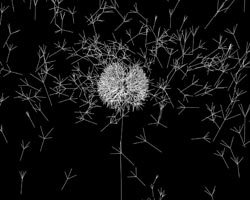
This dichotomy brings to light a sort of power struggle between humans and technology. On the one hand, technology is at the mercy of humans, being under their control and programmed to instantly do whatever it is asked to do. On the other hand, technology, unlike humans, has the theoretical ability to "live" forever. It is not usually in danger of getting "sick" (except through viruses, I suppose), it has no set life span that cannot be extended by its developers, and already there have been films and programs and gadgets that have long outlived those who made them.
Of course, it is also difficult to pinpoint where technology exists: in cyberspace, in the minds of the audience, on a film reel or a hard drive? Nonetheless, it does exist, and in fact, unlike humans, it has the power to exist in more than one place at a time.
And yet, technology cannot feel, cannot act of its own free will, cannot exit its hardware if it is destroyed or powered down. Despite the temptations of health and immortality, omnipresence and teleportation, I would rather be a human myself. :)
Shanken, Edward. Art and Electronic Media. New York: Phaidon Press, 2014. Print.

No comments:
Post a Comment